The digital marketplace has exploded, offering unprecedented opportunities for entrepreneurs to launch businesses from their homes. With U.S. merchants seeing $1.12 trillion in online spending in 2024, marking a 16.2% increase from the previous year, the allure of e-commerce is stronger than ever. Many aspiring entrepreneurs jump into online selling on various e-commerce platforms, often starting as a sole proprietorship. This simplicity can be appealing, but as your online venture grows, a crucial question emerges: When does your business truly need an LLC?
While an LLC isn't a legal prerequisite to start an online business, its strategic benefits for liability protection, tax advantages, and enhanced credibility become indispensable at certain growth stages. This guide provides a clear framework, outlining the key triggers and considerations to help you determine the optimal time to form an LLC for your online business, ensuring you're protected and positioned for long-term success.
The Initial Setup: Why You Don't Always Need an LLC From Day One
It's a common misconception that every business, regardless of size or stage, requires an LLC from its inception. The reality, particularly for online entrepreneurs, is often quite different. Many individuals successfully launch their ventures as sole proprietors or even general partnerships, especially when starting small or testing the market.
For new online businesses, especially those involved in dropshipping, affiliate marketing, or selling digital products with minimal inherent risk, starting without an LLC can be advantageous. It's simpler, requires less initial paperwork, and often costs less to set up. According to legal experts, you don't legally need an LLC to begin an online business; you can operate as a sole proprietorship, allowing you to deduct business expenses on your personal taxes. This flexible approach allows you to focus on developing your product, building your brand, and acquiring your first customers without the added administrative burden and cost of formal entity formation.
However, this initial flexibility comes with a significant caveat: unlimited personal liability. As a sole proprietor, there's no legal separation between you and your business. This means your personal assets—like your home, savings, and investments—are not protected from business debts, lawsuits, or claims. While this might be an acceptable risk for a side hustle generating minimal income, it quickly becomes a precarious position as your online business gains traction and grows.
Key Triggers: When an LLC Becomes Strategically Essential
The decision to form an LLC isn't about avoiding bureaucracy; it's about strategic risk management and unlocking growth potential. There are specific 'tipping points' in the lifecycle of an online business where the benefits of an LLC far outweigh the costs and effort of formation. Recognizing these triggers is crucial for proactive protection and scalability.
You're Generating Consistent Revenue (and Profit)
One of the clearest signals that it's time for an LLC is when your online business transitions from a casual hobby to a consistent source of income. Once your revenue streams are stable and your business is consistently profitable, the financial stakes escalate significantly.
While you can still claim deductions as a sole proprietor, an LLC provides a more formalized structure for managing finances, which can become beneficial as income grows. More importantly, consistent profit accumulation within a sole proprietorship puts more of your personal wealth at risk. An LLC creates a clear legal barrier, distinguishing your business's financial health from your personal finances. This separation becomes particularly valuable if your business encounters unexpected liabilities or financial disputes.
You're Selling Physical Products (Especially High-Risk Items)
If your online business involves selling physical goods, especially those that interact directly with customers or have potential safety implications, an LLC becomes almost non-negotiable. Product liability is a serious concern. Imagine selling skincare products that cause an allergic reaction, children's toys with a faulty part, or even food items that lead to illness.
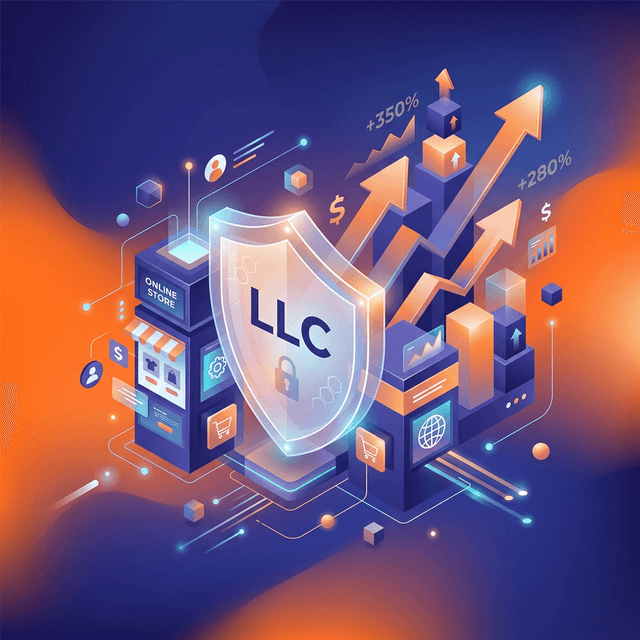
In such scenarios, a lawsuit could target your personal assets if you operate as a sole proprietor. An LLC, or Limited Liability Company, acts as a shield, protecting your personal assets from business-related lawsuits and debts. This "limited liability" is the cornerstone benefit, ensuring that if your business faces legal action due to a product defect or injury, only the assets owned by the LLC are at risk, not your personal savings or home. This protection is vital for any online business platform that directly sells or manufactures tangible products.
Ready to scale your e-commerce platform securely?
Our engineering team builds robust, compliant online storefronts that integrate seamlessly with your business structure. Protect your growth.
Get In TouchYou're Handling Customer Data or Processing Payments Directly
In today's digital landscape, customer data is both valuable and a significant liability. If your online business collects sensitive customer information—such as names, addresses, payment details, or even browsing habits—the risk of data breaches, privacy violations, and subsequent legal claims increases substantially. An LLC provides a formal legal entity that can be held accountable for data security, rather than individual owners.
Furthermore, how you process payments can also be a trigger. While many platforms handle payment processing, if your online business integrates directly with payment gateways like Stripe or PayPal for custom solutions or independent websites, having an LLC can streamline the approval process and enhance credibility. These payment processors often prefer or even require formal business entities for robust merchant accounts, signaling professionalism and stability.
You're Hiring Employees or Contractors
Scaling an online business often means bringing on additional help, whether they are full-time employees, part-time staff, or independent contractors. Once you start hiring, your legal obligations multiply, encompassing payroll, employment contracts, non-disclosure agreements, and potential worker's compensation issues.
An LLC formalizes these employment relationships, offering a distinct legal framework for managing your workforce. It also provides a layer of protection against employment-related lawsuits such as wrongful termination claims, discrimination suits, or disputes over contractor agreements. Operating as a sole proprietor with employees can expose your personal assets to significant risks from these types of claims.
You're Seeking Funding or Strategic Partnerships
As your online business grows, you might explore opportunities for external funding, such as bank loans, venture capital, or strategic partnerships. In these scenarios, having an LLC signals a serious, professionally structured business. Investors and lenders are often hesitant to provide capital to sole proprietorships due to the lack of legal distinction and perceived higher risk.
An LLC demonstrates commitment, formalizes your business operations, and makes it easier to manage equity, distribute profits, and define roles if you bring in partners. It positions your online business as a credible and stable entity, making it more attractive for external investment and collaboration.
Platform-Specific Considerations for Your Online Business
The specific online business platforms you use can also influence the timing and necessity of forming an LLC. While the fundamental principles of liability protection and tax benefits remain constant, certain platform dynamics add another layer to the decision-making process.
Shopify and Independent Websites (e.g., WooCommerce)
For online businesses operating on dedicated e-commerce platforms like Shopify or self-hosted solutions like WooCommerce, an LLC offers significant advantages. While you aren't strictly required to have an LLC to start selling on Shopify, forming one brings enhanced credibility and structural benefits.
Shopify is a leading platform for building independent online stores, favored by many businesses for its flexibility and comprehensive features. Similarly, WooCommerce, a powerful open-source e-commerce plugin for WordPress, allows businesses to create highly customizable online shops. For businesses using these types of online business platforms, an LLC simplifies interactions with payment processors, establishes a professional image for your customers, and provides critical liability protection, especially if you're selling unique, custom, or potentially high-risk products directly to consumers. This separation of personal and business assets is paramount when your brand is front and center and you're directly responsible for the entire customer experience and product fulfillment.
Amazon and Other Marketplaces (e.g., Etsy)
Online marketplaces like Amazon, Etsy, or eBay present a different set of considerations. While these platforms handle much of the customer-facing aspects and payment processing, the volume of sales and the variety of products often sold can heighten your overall risk exposure.
For instance, if you plan to operate a professional seller account on Amazon, you may eventually be required to obtain an Employer Identification Number (EIN), which is typically obtained after forming an LLC. While individual sellers might start without one, sustained growth on a platform like Amazon often necessitates a more formal structure for managing taxes, inventory, and potential disputes. An LLC provides that essential layer of protection, particularly when dealing with Amazon's rigorous seller policies and the high volume of transactions. Similarly, for artisans on Etsy, an LLC provides peace of mind as their craft grows into a substantial online business, protecting them from claims related to their handmade goods.
Beyond Liability: Tax Benefits and Credibility Boosts
While liability protection is often the primary driver for forming an LLC, it's far from the only advantage. As your online business matures, an LLC unlocks various tax benefits and significantly enhances your professional standing, both of which are crucial for sustainable growth.
Tax Advantages
One of the most appealing aspects of an LLC is its flexible tax treatment. By default, an LLC enjoys pass-through taxation, meaning the business itself isn't taxed on its profits. Instead, profits and losses are "passed through" to the owners' personal income tax returns and taxed only once at their individual income tax rates. This avoids the "double taxation" common with C-corporations, where profits are taxed at the corporate level and again when distributed to shareholders.
Furthermore, eligible LLCs have the option to elect S-Corporation tax status with the IRS. For businesses generating substantial profits, an S-Corp election can potentially lead to significant savings on self-employment taxes. Instead of paying self-employment taxes on all business profits, owners can pay themselves a "reasonable salary" and take the remaining profits as distributions, which are not subject to self-employment taxes. This strategy can result in thousands of dollars in annual savings as your online business thrives. While sole proprietors can deduct business expenses, an LLC provides a clear, formalized structure for these deductions, making financial management and tax preparation more straightforward as your business complexity grows.
Enhanced Credibility and Professionalism
In the competitive online marketplace, trust and professionalism are paramount. Adding "LLC" after your business name instantly elevates your brand's image. It signals to customers, suppliers, partners, and potential investors that you operate a legitimate, well-structured entity, not just a casual side project.
This enhanced credibility can open doors to new opportunities. It can make it easier to secure business loans, establish lines of credit, and open dedicated business bank accounts, all of which are essential for scaling operations. Suppliers and wholesalers often prefer to work with incorporated businesses, viewing them as more reliable and financially stable partners. Ultimately, forming an LLC reinforces your commitment to your online business, building a foundation of trust that can significantly impact your long-term success on any online business platform.
Making the Proactive Decision: Your Roadmap
The journey of an online entrepreneur is dynamic, constantly evolving with market trends and personal growth. The decision to form an LLC is not a one-size-fits-all solution, nor is it a requirement for simply starting your online venture. However, it is a pivotal strategic move that becomes increasingly essential as your online business grows in complexity, revenue, and risk exposure.
Your roadmap to making an informed decision should involve a careful assessment of your current business stage:
- Assess Your Revenue: Are you consistently profitable, moving beyond hobby income?
- Evaluate Your Products/Services: Are you selling physical goods, especially high-risk items?
- Review Your Data Handling: Are you collecting sensitive customer information or processing payments directly?
- Consider Your Team: Are you hiring employees or independent contractors?
- Define Your Growth Goals: Are you seeking funding, partnerships, or significant scaling?
The key takeaway is to be proactive. Don't wait until a lawsuit lands on your doorstep or a major financial opportunity passes you by due to a lack of formal structure. By recognizing these triggers and understanding the comprehensive benefits—from robust liability protection and significant tax advantages to enhanced credibility—you can strategically transition your online business from a sole proprietorship to an LLC at the opportune moment. This ensures that as your online business platforms expand and thrive, your personal assets remain safeguarded, and your professional standing is solidified for sustained success.